

6 Cigar Burning Issues and How to Fix Them
Nov 13 2025
6 Cigar Burning Issues and How to Fix Them
Anyone can experience cigar burning issues, from new cigar enthusiasts to smokers with years of experience. Whether it's an uneven burn or cigar coning, cigar problems come in various forms.
However, cigar burn issues are fairly easy to rectify. Our practical guide offers the best advice for resolving cigar burning difficulties and provides tips for preventing future issues.
What Is the Best Cigar Burn?
The best cigar burn is steady and even, with a straight ash and a cool, smooth smoke. Proper lighting techniques help form a straight burn.
A conical burn is another perfect type of cigar burn. It signifies high-quality cigar construction because the ligero — a grade of filler tobacco — burns slowly in the middle. The ash will then form into a cone shape.
6 Common Cigar Burning Issues
The way your cigar burns is a significant indicator of its quality. A common misconception is that the burn originates from the lighting technique used for the cigar. However, the cigar construction also makes an impact. There are different types of cigar burns to be aware of:
1. Cigar Tunneling
When a cavity or slight dip appears in the middle of the lit cigar ash, it clearly indicates that the cigar rolling process is incorrect. A cause of cigar tunneling is the use of a volado — the lower section of the plant — which is part of its construction.
Instead, a slow-burning ligero is better as the middle leaf and the volado works well as the outer. For less severe cigar tunneling, use a slower puffing technique or rest the quick burning side downwards in an ashtray.
2. Cigar Canoeing
Poor lighting techniques or uneven humidifying may cause cigar canoeing, where one side burns faster than the other and creates a canoe shape. Filler-packed tobacco, which is bumpy, is another indicator of canoeing. Rotating the cigar when smoking will help heat the ash evenly. For minor cigar canoeing, try rotating the cigar to allow an even burn.
3. Conical Crater Burn
A conical crater burn happens when there is too much burning on the outside and a crater forms in the center. Crater burns are a possible sign of poor cigar construction. Slow down the puffing pace and keep rotating to even out the heat and airflow.
4. Cigar Coning
Coning occurs when the cigar wrapper burns quicker than the tobacco. It indicates uneven rolling or that the smoker needs to slow down their smoking pace. Let the cigar rest for a moment before smoking again.
5. Mouse Hole Burn
When small black circles appear above the burn line on the side of the wrapper, this indicates a mouse hole burn. A small tunnel in the filler tobacco makes one side of a cigar burn quickly and the other side only burn slightly. Like with canoeing, rotate the cigar for an even ash heat.
6. Cigar Splitting
Over-humidifying a cigar or smoking it too quickly can cause cigar splitting. A cigar split is when the wrapper leaf either cracks or splits. Slowing down the smoking process will likely solve the issue. For the future, consider the temperature you store your cigars.
What Causes a Cigar to Tunnel?
The hot smoke and harsh taste of a tunneling cigar make the smoking experience unpleasant. Uneven burning also creates waste. Common causes of cigar tunneling are:
- Bad cigar construction: Tunneling is a prime indicator of low-quality cigar construction. Inconsistencies with filler will cause an uneven burn.
- Poor lighting: Lighting your cigar unevenly before smoking can lead to cigar tunneling. One part of the cigar will likely burn more quickly than the other.
- Humidity issues: Undesirable humidity and moisture levels — whether too little or too much — can contribute to cigar tunneling.
- Unstable puffing: Longer and sparser puffs allow the filler to gain more oxygen compared to the outer paper. As a result, the center of the cigar burns quickly.
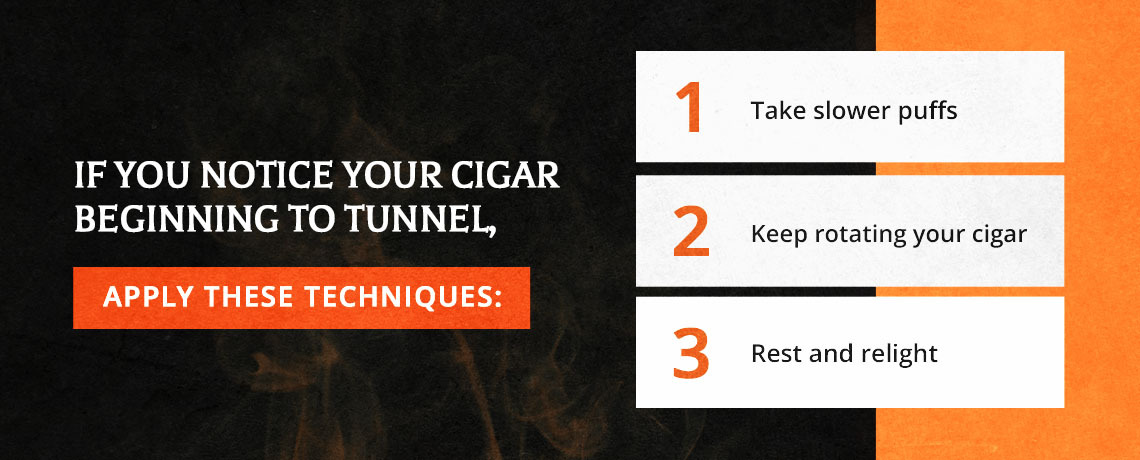
If you notice your cigar beginning to tunnel, apply these techniques:
- Take slower puffs: Find a rhythm where you take consistent and slower puffs. Changing your puffing technique reduces the likelihood of the center burning too fast.
- Keep rotating your cigar: To ensure all sides of a cigar gain an even level of oxygen, maintain a rotating flow while smoking.
- Rest and relight: Letting the cigar rest briefly slows down and levels out the burn. If the cigar loses its burn, relight it with a gentle approach to achieve an even burn.
How to Fix a Canoeing Cigar
Try these effective methods to fix a canoeing cigar and ensure a smoother smoking experience:
- Let the cigar rest: From the moment you see your cigar canoeing, let it rest. The early sign of canoeing is also known as flagging. Once the cigar is unlit, tap the ash from the bottom. Ensure the bottom is flat again before relighting your cigar.
- Adopt the licking method: Apply a light amount of saliva behind the ash on the canoeing side of the cigar wrapper. The licking method aims to reduce the flagging and allow the longer side to become level.
- Cut before relighting: Use a specialized cigar cutter tool to cut the shorter side of the cigar burn by approximately half an inch. Cutting this part helps you avoid charred tobacco.
Why Do Moisture and Humidity Affect Cigar Burn?
The fermented tobacco leaves, which comprise part of the cigar-making process, must be stored under specific conditions to maintain correct moisture and humidity levels. Cigar storage conditions affect burn control and quality, including aroma and flavor profiles. Here are the main factors contributing to humidity and moisture:
Humidity
Cigars are sensitive to humidity changes because they absorb and release moisture. Too much humidity means cigars will become damp. Using a humidor to control the humidity in your cigar storage environment allows you to regulate the moisture content.
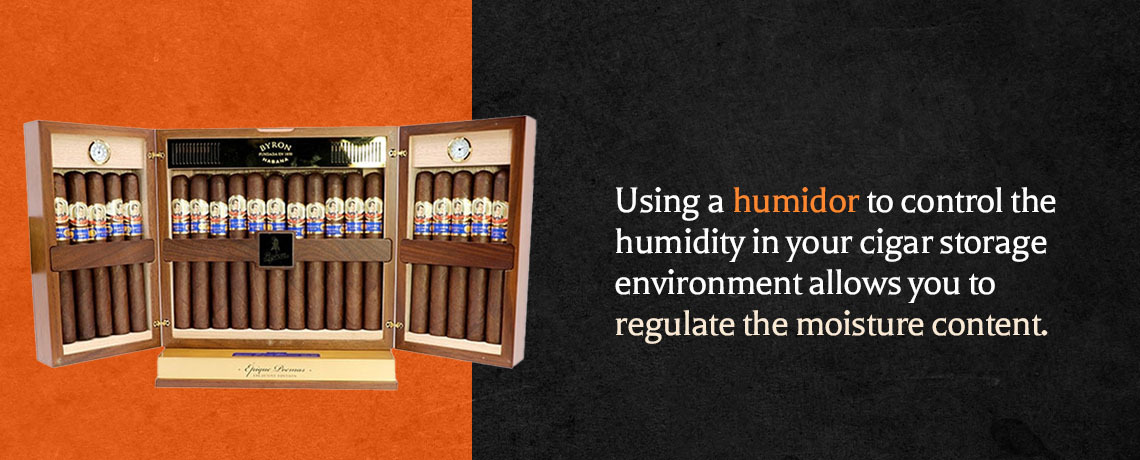
Relative humidity (RH) levels for cigars are best between 65% and 70%. Try to maintain these levels for freshness and even cigar burning.
Moisture
Moisture overload, which results from high levels of humidity, causes cigars to become damp. A damp cigar makes the tobacco swell and become difficult to smoke. Cigar tunneling is likely to occur as a result. After cigars leave the manufacturing factory, the moisture content level will be between 12% and 15%. Anything above or below this value affects the burn and creates a bad taste.
Excessive smoke also becomes an issue with damp cigars, leading to an unpleasant smoking experience. A cigar that's soft and spongy to the touch typically indicates that it has too much moisture. Holes from tobacco beetles and mold are other issues arising from high moisture and humidity levels.
What Causes a Cigar to Become Dry?
The environment in which you store cigars affects their moisture and dryness levels. Excessive dryness can cause cigars to become brittle and crack. If you leave a cigar in hot and sunny conditions for too long, it dries out and the flavors will disintegrate with the cigar’s oils. Burning issues will also occur because the oils evaporate at high temperatures and the cigar will burn too fast.
How to Avoid an Uneven Burn on a Cigar
When lighting a cigar, slight intricacies make all the difference in its flavor profile, quality and burn. Explore common cigar lighting mistakes and solutions to consider for the future:
Use a Butane Torch Lighter
Your choice of lighter impacts a cigar’s aroma and flavor. Lighters with gasoline affect the cigar’s flavor. For a consistent taste, using a butane torch lighter offers an odorless flame. Long wooden matches are also a good option if you don't have a torch lighter, as they are gentle on the cigar to preserve its flavor.
Toast Your Cigar
If you light a cigar straight onto a flame, it may cause a harsh flavor and an uneven burn. Instead, toast your cigar lightly, holding the cigar about an inch from the flame. Without making direct contact with the flame, rotate the cigar above it to create an even burn and prevent overheating.
Puff While Relighting
A harsh taste and potential cigar canoeing are the results of puffing too hard while relighting. Rotating the cigar and taking lighter puffs will create a better, more even burn. You also prevent overheating the tobacco and any bitterness in taste.
Inspect the Burn
Carefully inspecting the cigar burn can help prevent uneven burning and canoeing. Take a moment to check the cigar foot. If one area is unlit, keep a flame over that area and rotate it for an even burn.
Relight Carefully
If you need to relight a particular area of your cigar, be sure to keep it on the flame for a minimal amount of time to prevent a bitter taste. Without rotation, the burn will be too hot. Gently light the particular side and keep rotating for a smooth, even smoke.
Why Does My Cigar Keep Going Out?
The frustration of a cigar losing its light is an experience familiar to all cigar lovers. The main reasons why your cigar won’t stay lit derive from the cigar's construction and its storage conditions. Discover the reasons below:
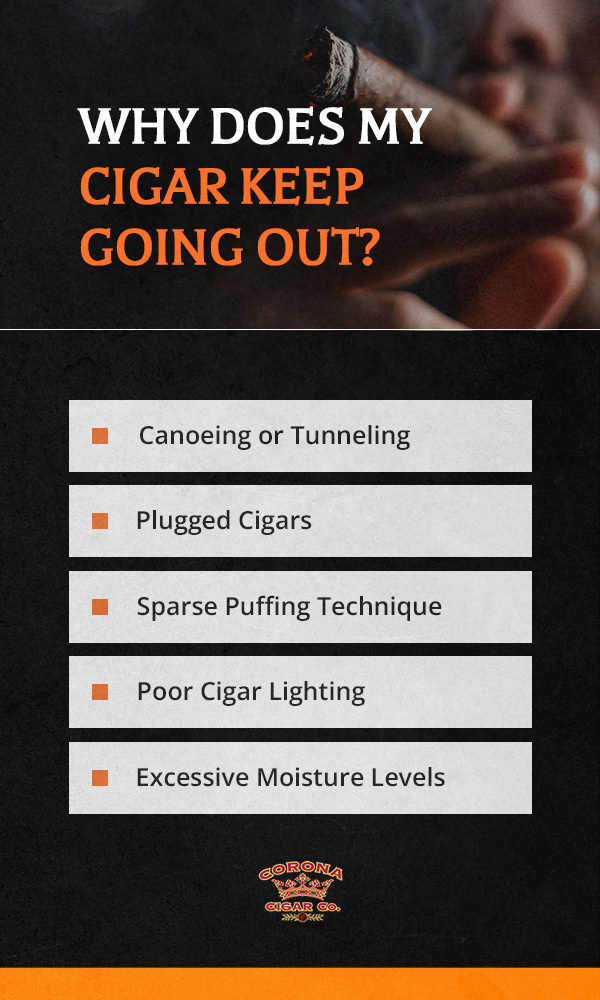
Canoeing or Tunneling
Canoeing and tunneling are common culprits, as the binder, filler and wrapper tobaccos combust at different rates. An easy solution is to use a butane torch lighter. Lighting areas that keep going unlit usually solves the problem. However, if your cigar still keeps going out even after relighting, this indicates an issue with its construction.
Plugged Cigars
Being unable to draw smoke or air from your cigar means it is clogged. You'll be able to tell whether this is the case as soon as you light your cigar. The puffing technique is taxing, and the cigar will quickly lose its burn due to its lack of oxygen.
Larger amounts of binder or filler tobacco during the construction process are probable. Excessive moisture is another culprit of a cigar plugging. A handy resolution is to use a deeper cut for the cigar.
Sparse Puffing Technique
Without puffing on your cigar after a few minutes, it will naturally become unlit. The best practice for cigar smoking is leaving a 30-second gap between taking draws. A gap between puffs allows you to enjoy the flavor, and the ash has time to develop firmness. If you set your cigar on an ashtray for a few minutes, it will likely become unlit. The cigar tobacco is humidified and does not keep its burn after a couple of minutes.
Poor Cigar Lighting
Ignoring the above lighting best practices is another reason why your cigar may become unlit. Consider your choice of lighter, how you hold the cigar against the flame and your level of rotation. Proper rotation ensures the wrapper, filler and binder tobaccos are even. Softly blow on the cigar cherry and ensure there's an even light across it. If you see dark spots, the cigar is not completely lit.
Excessive Moisture Levels
Excessive moisture, resulting from substandard storage conditions, is another factor that causes cigars to become unlit. An RH level between 65% and 70% is best for retaining quality and flavor. If your cigar becomes too moist, leave it in a dry spot for around a day before smoking it. Another way to test moisture is to conduct a pinch test. A sponge-like feeling indicates there is too much moisture present in the cigar.
Maintaining a Smooth Draw and Airflow
Perfecting the draw and sustaining a good airflow boosts a cigar’s aroma and flavor while maintaining an even burn. Explore these helpful tips for an enjoyable cigar-smoking experience:
- Manage the burn: A cigar that feels too hot may lead to a poor taste and an unpleasant draw. Set the cigar down for a brief moment to let it cool.
- Remember to rotate: Keep rotating while smoking for an even burn from start to finish.
- Choose the best cut: Ensure you understand the various cigar cuts and their benefits. A standard cut offers a wider draw, a V-cut is sharp for a stronger flavor and a punch cut delivers a tight draw.
- Perfect your puffing technique: Speedy puffing does not allow the tobacco to breathe, which hinders flavor and may cause an uneven burn. Slow draws ensure an even burn and avoid overheating.
- Inspect before lighting: Examine the construction of your cigar before lighting up. An inspection ensures there are no uneven parts in the cigar body and you do not smoke a cigar with a harsh taste.
Stop Your Cigar From Burning Unevenly With High-Quality Brands
Lighting problems and poor cigar construction lead to burning issues, which cause an unpleasant smoking experience. By following the advice in this article, you can limit the risk of poor cigar burning in the future.
Are you new to cigars or looking to diversify your flavor options? Discover the superb and flavorful Cigar Samplers from Corona Cigar Co. You can also try out a selection of excellent flavors and premium brands, including Davidoff, Padrón and Avo, at low prices.
For a regular subscription of cigars sent straight to your door, join our Cigars of the Month Club with exciting new flavors and trusty classics. Your subscription will automatically renew every month so that you won’t miss out on the finest cigars.
Buy top-quality cigars and accessories today with free shipping on orders over $125. Request a free copy of our catalog and find new cigars to try out.